
Malta Island

Discover Malta Island

Why Book Your Malta Island Holiday with GotoBeach?

Malta — the main island — is the most concentrated holiday in this whole guide. In one week, from a single base, you can swim off a rock lido in the morning, walk a 7,000-year-old temple older than the pyramids after lunch, and be eating fresh fish in a harbour that Caravaggio once knew by dinner, all without a hire car and all in English. It is a compact limestone island roughly the size of the Isle of Wight, ringed by honey-coloured towns, where nothing is more than about 45 minutes from the airport and the sea is a Mediterranean blue that looks colour-corrected. For a first trip abroad, a winter city break or an easy summer beach week, few islands anywhere pack in more.

Every Malta package we sell carries full ATOL financial protection under licence #11211, and your ATOL Certificate lands the moment you book — you can read exactly how your ATOL financial protection works before you part with a penny. Every hotel on this page has been hand-picked and inspected in person against our 22-point criteria, not lifted from a brochure, so you are booking a base someone from our team has genuinely walked through. And we will be honest with you where it matters: the main island's sand is limited and clusters in the north, so on Malta the single most important decision you make is which town you book — get that right and the rest of the holiday falls into place.

"Malta is the island I send people to when they hate wasting a day of their holiday," says Thomas Kaplan, our Product Manager and Mediterranean Specialist, who spent 28 years across TUI, Thomas Cook, Neckermann and Vrijuit before he came to run our hotel programme. "On my audit visits here I don't stay in the show suite — I ask for a standard room, I eat in the buffet on an ordinary Tuesday, and I walk down to whatever the hotel calls its beach to see whether it's actually sand or a ladder into the sea. That distinction is the whole game on Malta. St Julian's and Sliema are brilliant urban bases with rock lidos rather than beaches; the real sand is up in the north around Mellieħa. Tell my team whether you want buckets-and-spades or bastions and buzz, and we'll put you in the right bay rather than the prettiest photo." You can read more about how Thomas audits our hotels before they earn their place.
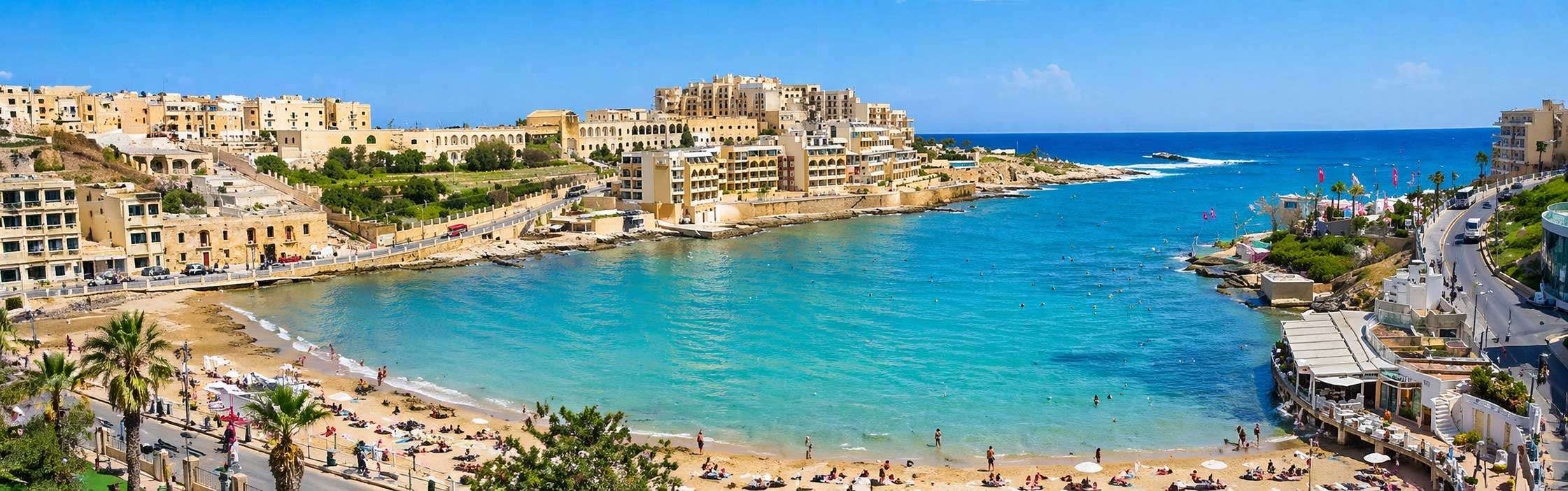
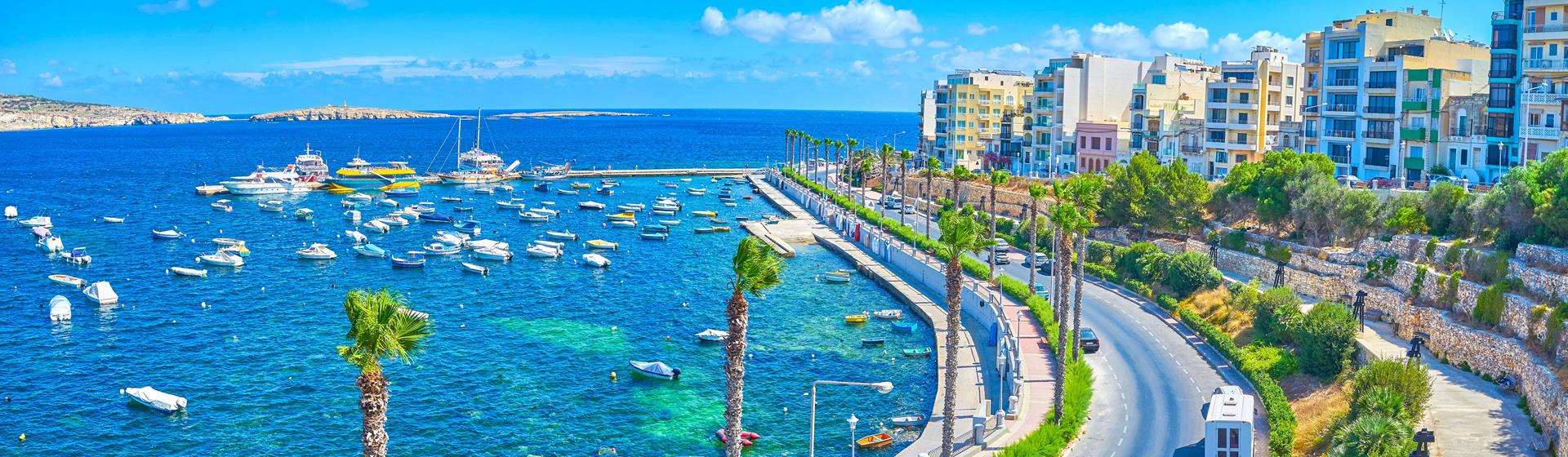
 

Photos of Malta Island

Hand Picked Deals

Top Hotels in Malta Island

Hotel Argento
Hotel Argento

St. Julians / Malta

Bed&Breakfast

£ 2079.47

Best Western Premier Hotel

St. Paul's Bay / Malta

Room Only

£ 1910.32

Hyatt Centric
Hyatt Centric

St. Julians / Malta

Bed&Breakfast

£ 1665.64

Discover Malta Island

The resorts of Malta Island

Inspected in person · 22-point criteria

Malta isn't one resort, it's a handful of very different towns strung along the north and east coasts, each an easy bus or ferry hop from the next. Here's how the main bases compare — with the honest best-for and maybe-not-for on each — so you pick the right town before you dig into hotels.

East coast · nightlife hub

St Julian's

Lively & Bay-Front
★★★★★

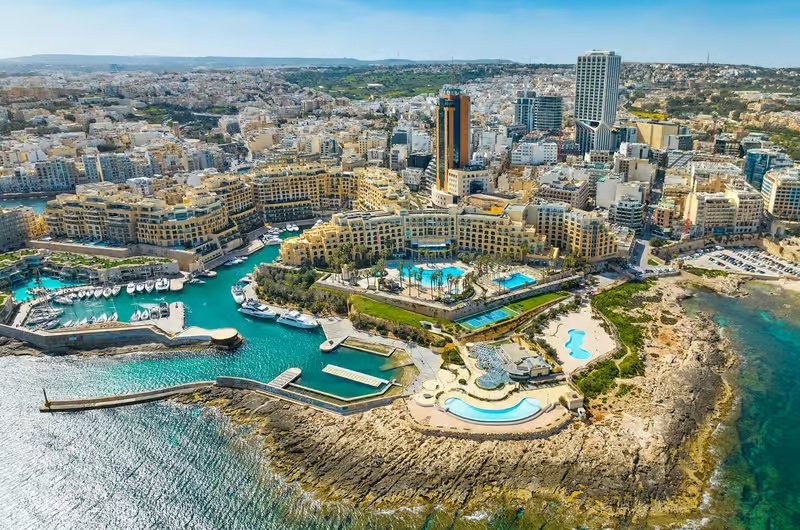
Malta's liveliest base, wrapped around pretty Spinola Bay with the biggest five-stars, the best restaurants and Paceville's nightlife next door. Best for couples, groups and anyone who wants buzz on the doorstep; maybe not for families chasing a big sandy beach, as swimming here is off St George's Bay and the rock lidos.

🏖 St George's Bay sand & rock lidos · on site

East coast · seafront town

Sliema

Promenade & Ferries
★★★★★

The island's smart shopping-and-seafront town, with a long promenade, flat rock lidos for swimming and the fast ferry straight across to Valletta. Best for a grown-up city-by-the-sea week and easy sightseeing; maybe not for sandcastle holidays, as Sliema swims off the rocks rather than a beach.

🏖 Rock lidos & promenade · ferry to Valletta

North coast · the sandy end

Mellieħa

Sandy North & Family
★★★★★

The family favourite and the one part of Malta with proper sand — Mellieħa Bay is the island's largest beach, with Golden Bay and Għajn Tuffieħa a short drive away. Best for buckets and spades and the Gozo ferry; maybe not for those who want nightlife or a walk to the capital, as it's the quiet, spread-out end of the island.

🏖 Mellieħa Bay — Malta's biggest sandy beach

North coast · Buġibba & Qawra

St Paul's Bay

Value Resort Strip
★★★★★

The best-value base on the island, taking in Buġibba and Qawra — big all-inclusives, the National Aquarium, a lively promenade and boat trips to Comino from the doorstep. Best for families and all-inclusive value; maybe not for a beach purist, as swimming is off lidos and small sandy patches rather than a headline strand.

🏖 Lidos & small bays · boats to Comino

East coast · by Sliema

Gzira

Car-Free & Central
★★★★

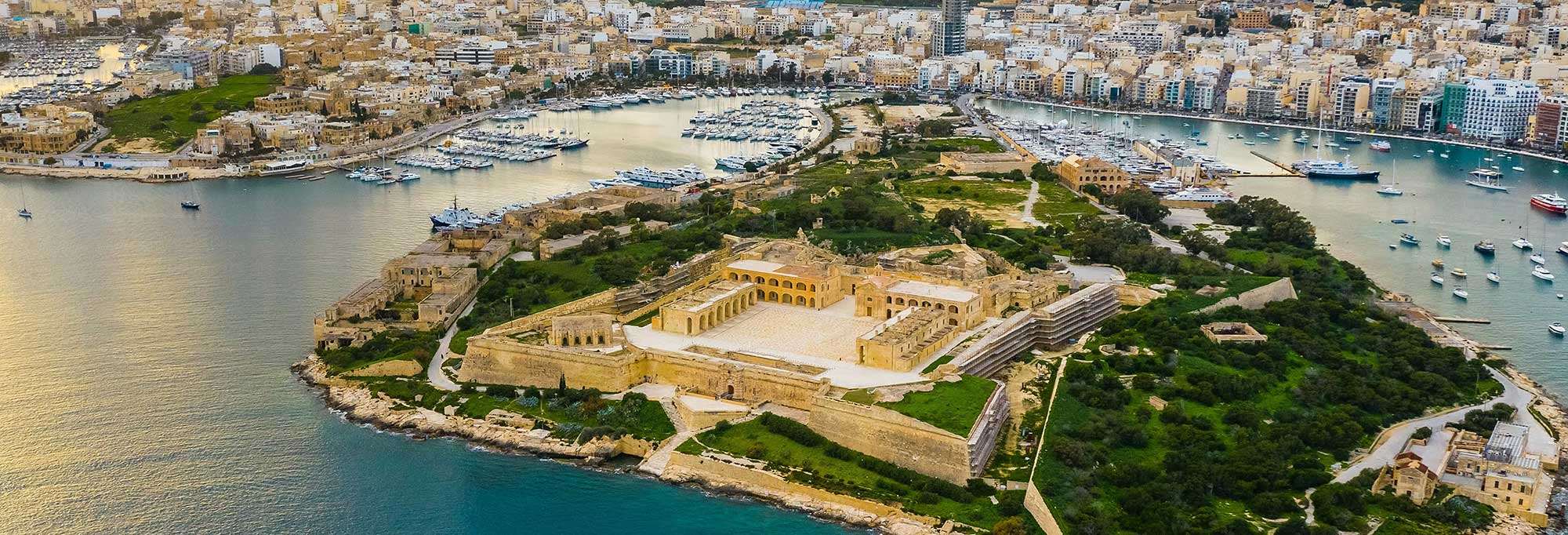
A quieter, better-priced seafront strip between Sliema and Valletta, looking across the water to Manoel Island. Best for a central, walkable, car-free base within a stroll of Sliema's shops and the capital ferry; maybe not for a resort-holiday feel, as it's a real working town rather than a hotel bubble.

🏖 Harbour promenade · walk to Sliema lidos

One more base is worth knowing about even though it doesn't have its own page: Floriana, tucked just outside Valletta's gates, is a quiet culture base for anyone who wants to sleep beside the capital — the grand old Grand Hotel Excelsior sits beneath the bastion walls there with its own summer lido. To see how the whole island fits together, browse our top hotels in Malta, filter the all-inclusive hotels in Malta for a fuss-free week, or compare the quieter sister island on our Gozo Island page. It all comes under one straightforward GoToBeach Malta package.

Discover Malta Island

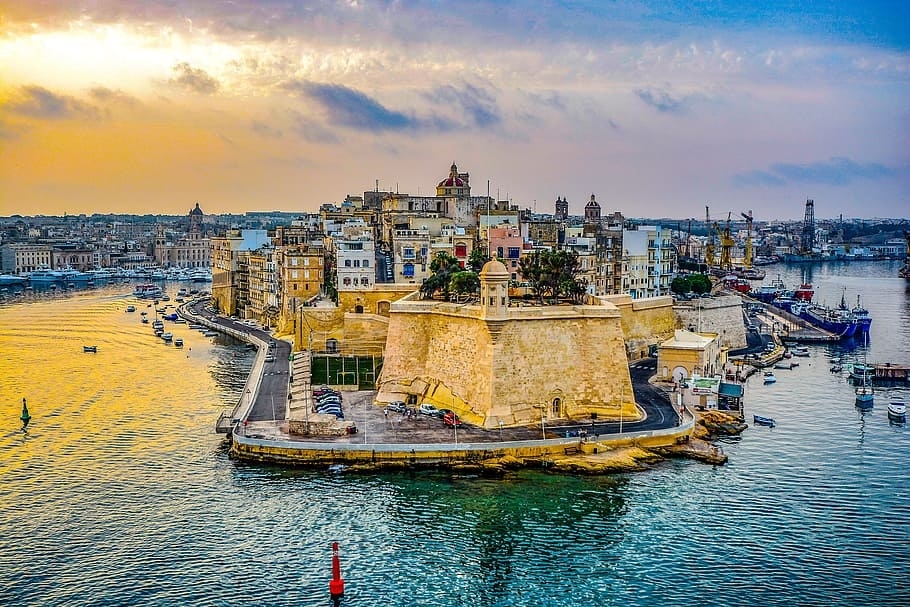
The main island works because it does the easy things brilliantly and then hands you far more history than an island this size has any right to hold. The headline is Valletta, a tiny UNESCO-listed capital you can cross on foot in twenty minutes, built by the Knights of St John after the Great Siege of 1565 and barely changed since — golden bastions, a baroque co-cathedral with a Caravaggio on the wall, and the Grand Harbour spread below the Upper Barrakka Gardens. Across the water sit the Three Cities, older still and almost tourist-free, best seen from a traditional dġħajsa water-taxi. Inland, the silent walled city of Mdina — Malta's medieval capital — empties of day-trippers by evening and becomes one of the most atmospheric night walks in the Mediterranean.

What makes Malta unusual is how close all of it sits to your sunbed. From a base in Sliema or St Julian's you can be in Valletta by ferry in ten minutes; from Mellieħa in the north you're minutes from the Gozo ferry and the boats to Comino. Prehistory is everywhere too — the Ħaġar Qim and Mnajdra temples on the south cliffs predate Stonehenge and the pyramids — and because English is an official language, the island drives on the left and uses the UK's own three-pin plugs, none of it takes any working out.

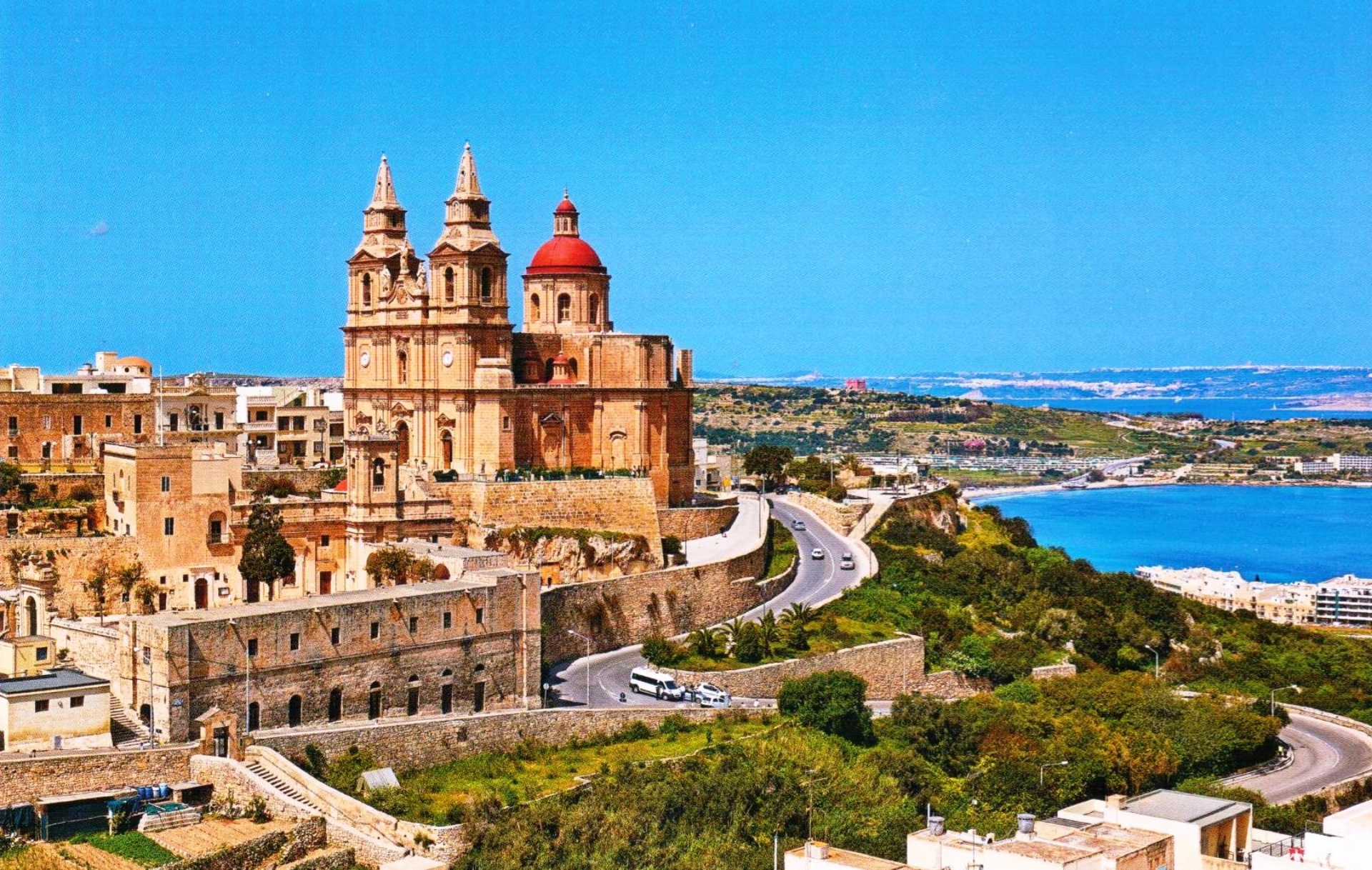
Base yourself well and Malta rewards curiosity in a way few short-haul islands do. The Sunday fish market at Marsaxlokk, with its painted luzzu boats bobbing offshore, is the classic weekend morning; the Blue Grotto sea caves near Wied iż-Żurrieq make a good boat-trip pairing with the southern temples; and the quiet inland villages — Naxxar, Mosta with its vast domed church, Rabat and its early-Christian catacombs — show a Malta that has nothing to do with sunbeds at all. For a rainy afternoon or a break from the heat there's the Malta National Aquarium up at Qawra, the war rooms and museums of Valletta, and the fortified silence of Mdina. It is the sort of island where you plan a beach week and come home talking about the history.

Malta Island beaches & seafront

Here is where honesty earns its keep. Malta is not a sandy island in the way Turkey or Greece are — most of its coast is flat, sun-warmed limestone shelving straight into deep, exceptionally clear water, and along the east coast at Sliema, Gzira and St Julian's you swim from ladders and rock lidos rather than sand. Once you know that, it stops being a disappointment and starts being a feature: the water is cleaner and deeper than most hotel beaches, sunbathing on the flat rock is a Maltese institution, and the swimming off Sliema's front is genuinely lovely on a calm day.

The real sand lives in the north-west. Mellieħa Bay (Għadira) is the island's largest beach, a wide, shallow, family-friendly curve; over the ridge, Golden Bay and its wilder neighbour Għajn Tuffieħa give you the two prettiest sandy bays on Malta, backed by low cliffs and the island's best sunsets. Around St Paul's Bay there are smaller sandy patches and a string of lidos, plus the departure point for boats to the clear water of Comino. So the rule of thumb is simple: if a proper beach is the centre of your holiday, base yourself in the sandy north around Mellieħa; if you want a town, a promenade and easy sightseeing with your swimming off a lido, the east coast is made for you. Either way the sea stays warm and swimmable from June deep into October.

A couple of practical notes the brochures skip. The rock lidos of Sliema and St Julian's are more comfortable than they sound — the better hotels have their own sun-terraces cut into the shore with ladders, showers and a bar, and locals swear the deep, clear water off the rocks beats any hotel beach for actual swimming. On the sandy side, Mellieħa Bay shelves so gently that it suits nervous paddlers but fills up in August, while Golden Bay and Għajn Tuffieħa are prettier and wilder with a flight of steps down to the sand. Wherever you swim, the summer sun is fierce and shade is limited on the open rock, so a good hat and high-factor sun cream matter more here than the sea temperature ever will.

Things to do around Malta Island

You could fill a fortnight and still leave things unseen. Valletta alone is a day — St John's Co-Cathedral, the Grandmaster's Palace, the Upper Barrakka Gardens and the daily saluting-battery gun over the Grand Harbour — and the Three Cities across the water are a gentler half-day by water-taxi. Mdina and neighbouring Rabat make a classic morning inland, best finished with a pastizzi and a coffee in the silent city's main square. On the south coast, the megalithic temples of Ħaġar Qim and Mnajdra pair naturally with a Blue Grotto boat trip, while the Hypogeum — an underground prehistoric burial complex — is so fragile that tickets sell out weeks ahead, so book before you fly.

For lighter, family days there's the Malta National Aquarium and the little bays of the north, plenty of boat trips out to Comino and around the harbours, and Popeye Village — the film-set turned family attraction — overlooking Anchor Bay near Mellieħa. Divers come to Malta specifically for its wrecks and caverns and warm, clear water; walkers take the coast paths above Għajn Tuffieħa; and everyone ends up on a harbour cruise at least once.

A few days out reward a little planning. The Sunday market at Marsaxlokk is as much about the harbour full of painted boats and the fish-lunch tavernas as the stalls themselves. Mosta's Rotunda, one of the largest unsupported domes in Europe, still bears the scar of a wartime bomb that fell through the roof during Mass and failed to explode. The vintage Gozo Channel ferry from Čirkewwa is a sight in itself, and even if you don't cross for the day the drive up to the terminal takes you past the north's best beaches. And if the heat gets much in July and August, the trick locals use is simple — sightsee early, retreat to the water or a shaded lido at midday, and save Valletta and Mdina for the golden hour, when the stone glows and the crowds have gone home.

Valletta & Mdina: Malta's baroque capitals

No holiday to the main island is complete without its two capitals, old and new. Valletta is the working one — a grid of golden streets built entirely by the Knights of St John, walkable end to end in twenty minutes, and crammed with more than its share of masterpieces: Caravaggio's vast Beheading of Saint John in the co-cathedral, the war-tunnel museums, and the Upper Barrakka Gardens looking clean across the Grand Harbour to the Three Cities. Time your visit for noon and you'll catch the saluting battery fire its cannon over the water, a ritual that has barely changed in centuries. Because the capital is a ten-minute ferry from Sliema and Gzira, most of our guests treat it as an easy repeat trip rather than a single big day out.

Mdina is the opposite mood entirely: the fortified medieval capital in the centre of the island, all silent honey-stone lanes, noble palazzos and one show-stopping view from the bastions across half of Malta. Day-trippers fill it by afternoon and drain away by evening, so the local move is to arrive late, have dinner within the walls, and walk the empty streets after dark when it earns its nickname, the Silent City. Pair the two on separate days rather than trying to cram both into one, and you'll understand quickly why Malta punches so far above its size for anyone who likes their beach week with a serious dose of history attached.

Comino & the Blue Lagoon by boat

Floating in the channel between Malta and Gozo is Comino, an almost-uninhabited scrap of an island whose one great asset is the Blue Lagoon — a shallow, sheltered channel of water so clear and so improbably turquoise that first-timers assume the photos are faked. They aren't. It is the finest swimming and snorkelling anywhere in the Maltese islands, and boats run to it all summer from St Paul's Bay, Buġibba, Sliema and the Cirkewwa ferry terminal, either as a quick shuttle or as part of a full-day harbour-and-caves cruise. The catch is its fame: by mid-morning in peak season the lagoon is busy, so the seasoned move is to take the earliest boat or a late-afternoon trip and have the water closer to yourself.

Comino rewards a little more effort, too. Walk fifteen minutes from the lagoon and the crowds thin to almost nothing, leaving the Santa Marija caves, the old watchtower and quiet rocky coves for swimming. Bring water, a hat and your own shade — facilities are deliberately minimal — and treat it as a half-day rather than a whole one so you're back on Malta for dinner. It is the single most photographed spot in the country for good reason, and no week on the main island is really finished until you've been in that water.

When to go to Malta Island

Malta has one of the longest seasons and the mildest winters in this guide — here's how the months actually feel, and when our specialist would book.

When Air Sea Our take
April–May 19–24°C 17–19°C Warm spring sunshine and perfect sightseeing weather; the sea is for the brave until late May, but the temples and Valletta are at their loveliest and prices are gentle.
June 27–29°C 21–23°C Full beach season begins with hot, dry days and an inviting sea, just before school-holiday pricing lands. A lovely sweet spot.
July–August 30–32°C 25–27°C Hot, dry and busy — sea like a warm bath and the island at full tilt. Book sea-view rooms and Comino boats early, and sightsee in the cool hours.
September–October 25–29°C 24–25°C Our pick: the warmest sea of the year, softer heat and thinner crowds once schools go back. The island at its best.
November–March 15–18°C 15–17°C Europe's gentlest winter city break — sightseeing in a light jacket, mild and open when much of the Mediterranean has closed.

If a beach-led week is the brief, aim for June or late September, when the sea is warm and the resorts busy but not heaving. If it's fortresses, temples and baroque streets you're after, almost any month rewards you — February half-term works surprisingly well as a culture break, mild and cheap and entirely open, exactly when the rest of the region has shut for winter. September and October give you that 24-degree sea with half the airport queue, and are the weeks our specialist books for himself.

The practical parts

Getting there

One airport, Malta International at Luqa, serves the whole country, around three and a quarter hours direct from London and most regional UK airports — the shortest flight in this guide. Nowhere on the main island is much more than 45 minutes from arrivals, and every GoToBeach package includes your airport-to-hotel transfer at both ends, so you can leave home in the morning and realistically be swimming by mid-afternoon.

Passports & entry

Malta is in the EU and the Schengen area, so UK visitors travel visa-free for up to 90 days in any 180, on a passport issued within the last 10 years and valid for at least three months beyond departure. The EES border system now registers a photo and fingerprints in place of a stamp, and ETIAS authorisation is coming soon. Rules can change at short notice — always recheck the official guidance close to departure.

Money

Malta uses the euro. Cards are accepted practically everywhere, including buses and kiosks, so cash needs are minimal — a little for market stalls and tips covers it. Service is sometimes added to restaurant bills; where it isn't, five to ten per cent is appreciated. Prices sit comfortably below Italy or France, which is part of the island's enduring value.

Health & insurance

No special vaccinations are required, healthcare standards are high and almost every doctor and pharmacist speaks English. A free UK GHIC card covers state healthcare in Malta, but it is not a substitute for comprehensive travel insurance, which is still essential — especially if you plan boat trips or diving. Tap water is safe but heavily desalinated, so many visitors prefer bottled for taste.

Getting around

Distances are tiny and you won't need a car unless you want one. The cheap, extensive bus network reaches every resort and sight, the Sliema–Valletta ferry turns the harbour crossing into sightseeing, and the Gozo ferry runs around the clock from Ċirkewwa. Malta drives on the left, UK-style, and uses UK three-pin plugs — two fewer things to adjust to.

Food & eating out

Maltese food is the island's history on a plate — Sicilian, Arabic and British influences in one small kitchen. Chase pastizzi pastries, slow-stewed rabbit (fenkata), Gozo's ġbejniet cheese and Sunday fish at Marsaxlokk market, washed down with the local Cisk lager. Menus are in English everywhere, and our specialist's guide to Malta's nightlife and gastronomy flags where to eat beyond the hotel.

Map of Malta Island

Frequently Asked Questions About Malta Island

Common questions and answers for planning your Malta Island holiday.

Handpicked packages featuring the best destinations across the Malta Island

Further reading from our specialists

Deeper diver from the team, all based on recent resort visits.

Official guidance & sources

Entry and health rules for Malta can change at short notice, especially as the EU rolls out its EES and ETIAS systems, so always check the official advice when you book and again shortly before you fly. These are the sources we trust.